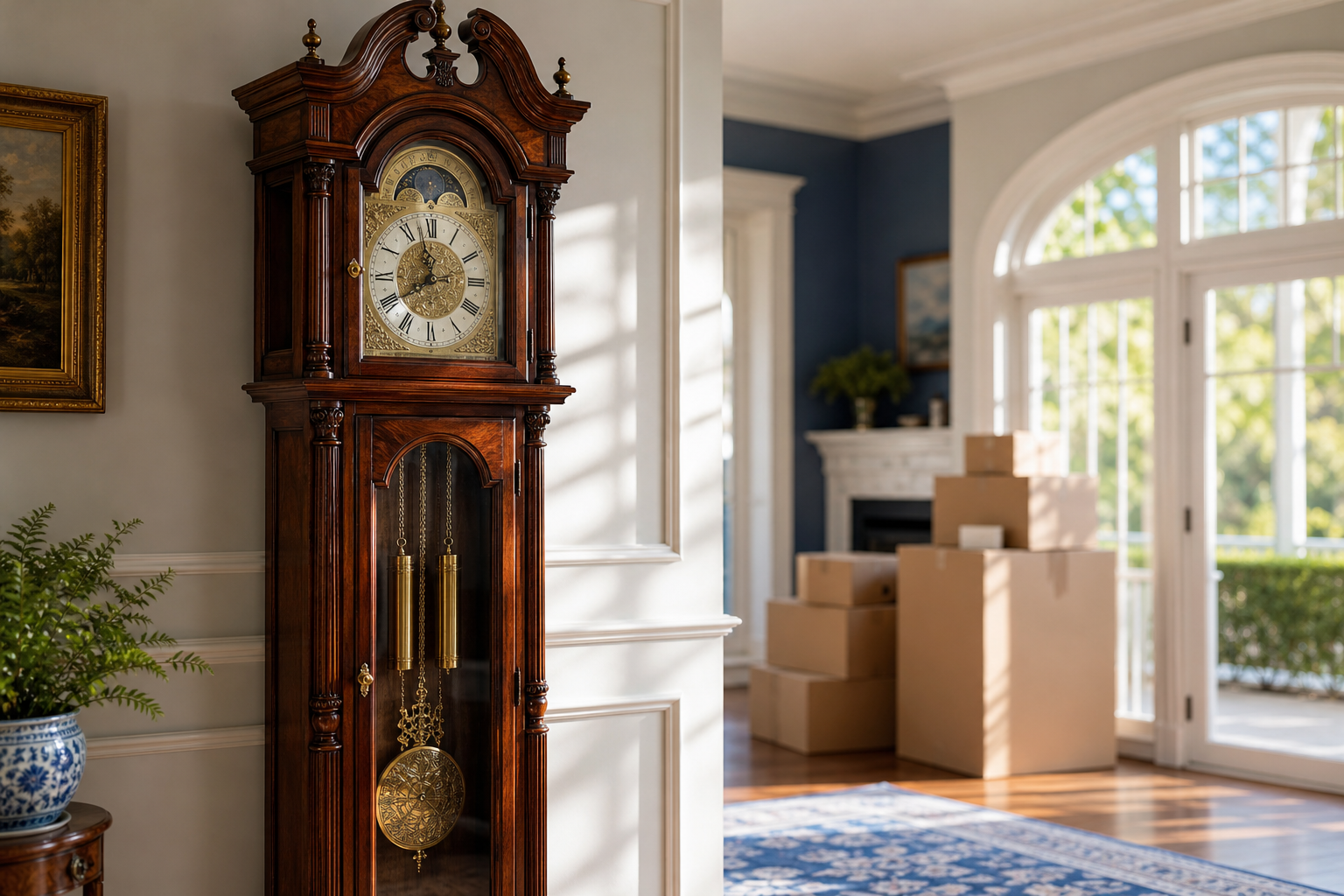
Moving antiques takes more planning than moving ordinary household furniture because age, repairs, fragile joinery, old finishes, and sentimental value can all change how a piece should be handled. Before anything is cleaned, wrapped, lifted, or loaded, each item needs to be assessed on its own terms.
Start by identifying antique furniture that needs extra handling
A careful inspection is the first step in protecting an antique. Do it before wrapping, before disassembly, and before anyone tries to lift the piece. Many antiques look sturdy at first glance, but old joints, repairs, veneer, and decorative elements may not tolerate normal moving pressure.
Look closely at the structure. The National Park Service recommends checking furniture for structural instability because loose joints and splits can fail under moving stress. Check legs, stretchers, feet, backs, arms, and lower rails. If a chair has fragile arms or a weak back, it should not be lifted by those parts.
Veneer and inlay deserve special attention. Bubbling, lifting edges, open seams, cracks, or dark water marks may indicate that the bond between the veneer and the wood below is compromised. Do not press down lifted veneer or attempt a quick repair with household glue before the move.
Fragile surfaces can be as risky as fragile structures
Upholstery, leather, textiles, gilding, shellac, lacquer, and painted finishes should be inspected for tears, exposed padding, powdering, flaking, sticky areas, fading, or older repairs. Historic textiles can become more vulnerable when humidity changes, and high humidity can encourage mould and adhesive failure.
Old glass, mirrors, marble, and decorative glazing should be treated as high-risk even if they appear intact. Deteriorated glass can be sensitive to sudden humidity changes, especially below 40% or above 60% relative humidity. If a piece has fragile protrusions, extensive prior repairs, unstable finishes, valuable provenance, or irreplaceable sentimental value, it should be evaluated as a specialty item before moving day.
Document condition and plan the moving route before packing
Condition records protect both the item and the moving process. Before packing begins, photograph every important piece from multiple angles: front, back, sides, top, underside, interiors, drawers, hardware, maker’s marks, labels, and existing damage. Include scratches, cracks, stains, veneer lifts, and previous repairs.
Written notes should support the photos. Record dimensions, materials, approximate weight, identifying numbers, provenance, and any known restoration history. Detailed photographs and written condition notes create a baseline for insurance review and delivery inspection, especially for valuable or irreplaceable furniture.
For especially valuable antiques, confirm coverage before the move begins. Ask whether the item needs scheduled-property or fine-arts coverage, and review declared values, deductibles, exclusions, and claims procedures. Carrier liability may vary based on the protection selected, so the moving contract should be understood before loading.
Measure the path before the antique is lifted
Planning the route reduces rushed decisions. Measure doorways, stairways, elevators, corridors, tight turns, and the vehicle access path. Decide whether the piece can travel upright, whether it needs temporary support, and whether it may be exposed to weather during loading.
Disassembly should not be automatic. Remove drawers, shelves, removable legs, doors, finials, marble tops, and glass only when they are designed to come off safely, and the remaining structure can be supported. Some components are safer when immobilized in place.
Doors, drop fronts, and drawers can be secured with cotton twill tape or soft cloth straps rather than adhesive tape, which can harm finishes. Screws, washers, keys, pulls, brackets, and other original hardware should go in labeled bags tied or secured to the relevant piece, never taped directly to the finish.
Choose wrapping materials that protect old surfaces without causing damage
The right packing material depends on the surface, structure, and fragility of the antique. The goal is to cushion the item without trapping moisture, transferring ink, pressing on weak details, or letting straps and rough edges rub against old finishes.
Use clean, nonabrasive materials that will not transfer adhesive, dye, ink, or plasticizer. Useful options can include acid-free tissue, unbleached cotton or muslin, polyethylene foam, archival corrugated board, and clean moving blankets when matched to the object. Ordinary paper and newspaper should be avoided because inks and acidic materials can stain or contribute to deterioration.
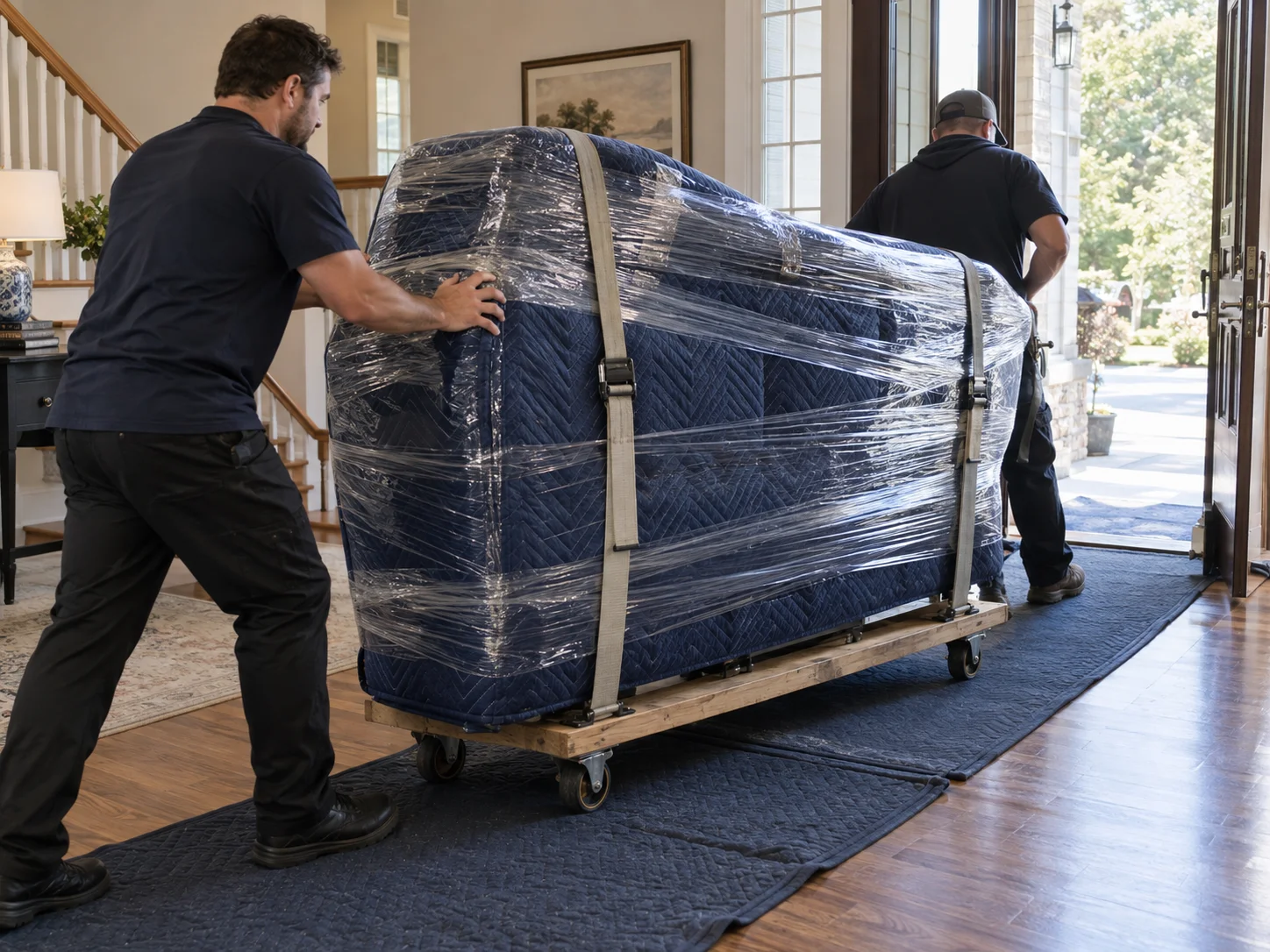
Finished wood often needs a breathable inner layer first, such as acid-free tissue or clean cotton. Foam or a padded moving blanket can then add cushioning. Avoid placing plastic film directly against shellac, lacquer, gilding, or similar finishes because trapped moisture and contact can cause damage.
Before packing, separate the antique into risk areas. A heavy table with removable marble is different from a carved cabinet, and an upholstered chair is different from a mirror. The following approach helps match the protection to the most vulnerable material:
Wood furniture: Keep buckles, zippers, straps, tape, and rough blanket edges away from finished surfaces. Add padding without forcing pressure onto weak joints or lifting veneer.
Carved details and protrusions: Protect corners, feet, finials, projecting hardware, and carved elements with foam blocks or edge guards that cushion without pressing into fragile decoration.
Glass, mirrors, and marble: Remove only when safe, wrap separately, add edge protection, and place in a rigid padded carton or custom crate. Valuable glass, mirrors, and marble often warrant custom crating.
Upholstery and textiles: Cover with clean, breathable cotton or a suitable protective textile layer, then add cushioning that prevents abrasion without compressing raised embroidery, fringe, brittle fabric, or exposed springs.
Small ornaments and hardware: Wrap individually and pack in rigid, double-walled boxes with cushioning on all sides. Fill voids so pieces cannot shift, but do not force padding against delicate surfaces.
When an antique has loose joints, lifting veneer, old glass, marble, carved details, delicate upholstery, or prior structural repairs, D1 Moving and Storage can help coordinate packing, moving supplies, local moving, long-distance moving, and storage planning around the specific needs of the piece.
Load, secure, and transport antiques with support at the strongest points
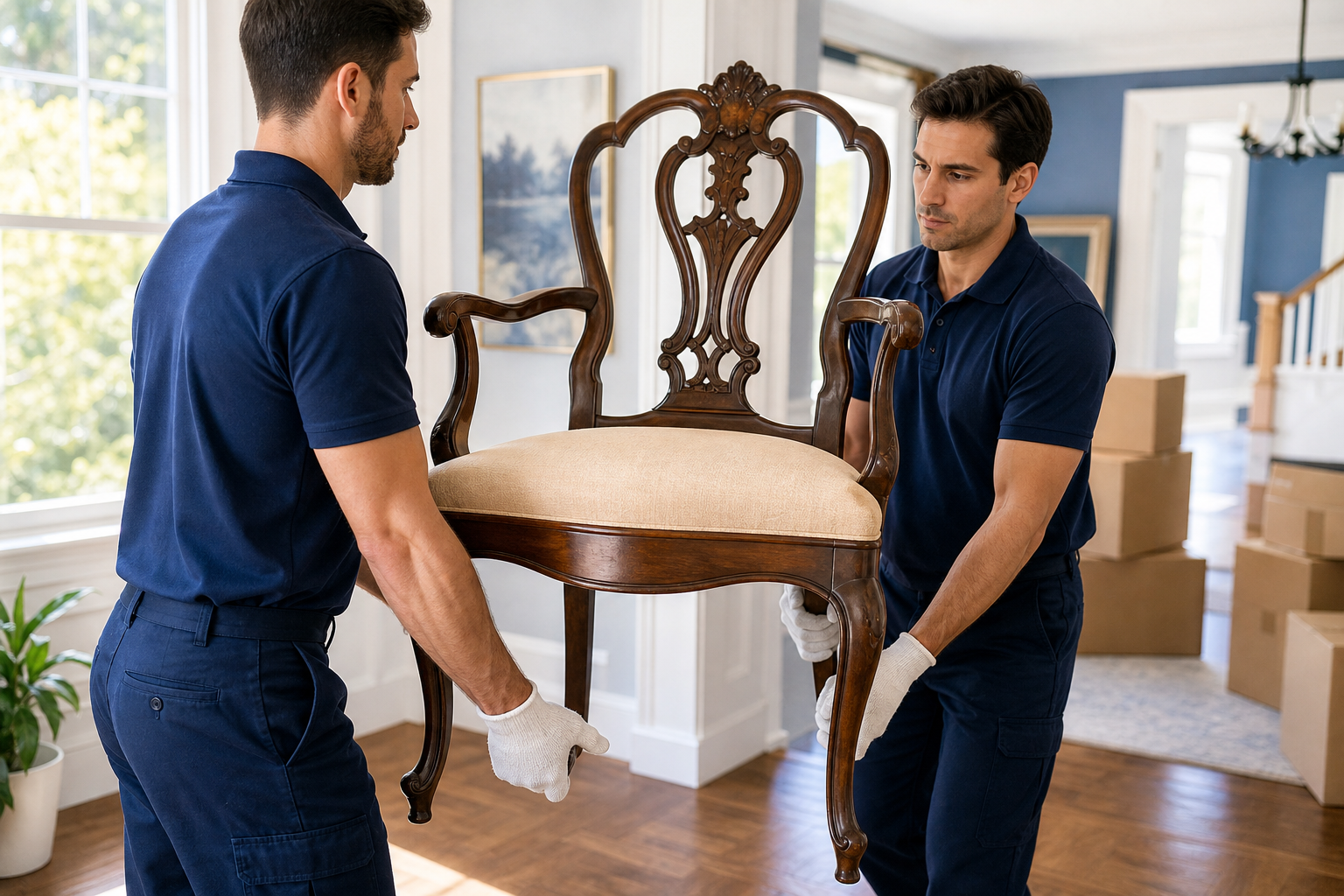
The safest wrapping can still fail if the item is lifted or loaded incorrectly. Antiques should be moved slowly, with enough people for the weight and shape. Dragging should be avoided because it stresses legs, feet, joints, and decorative elements.
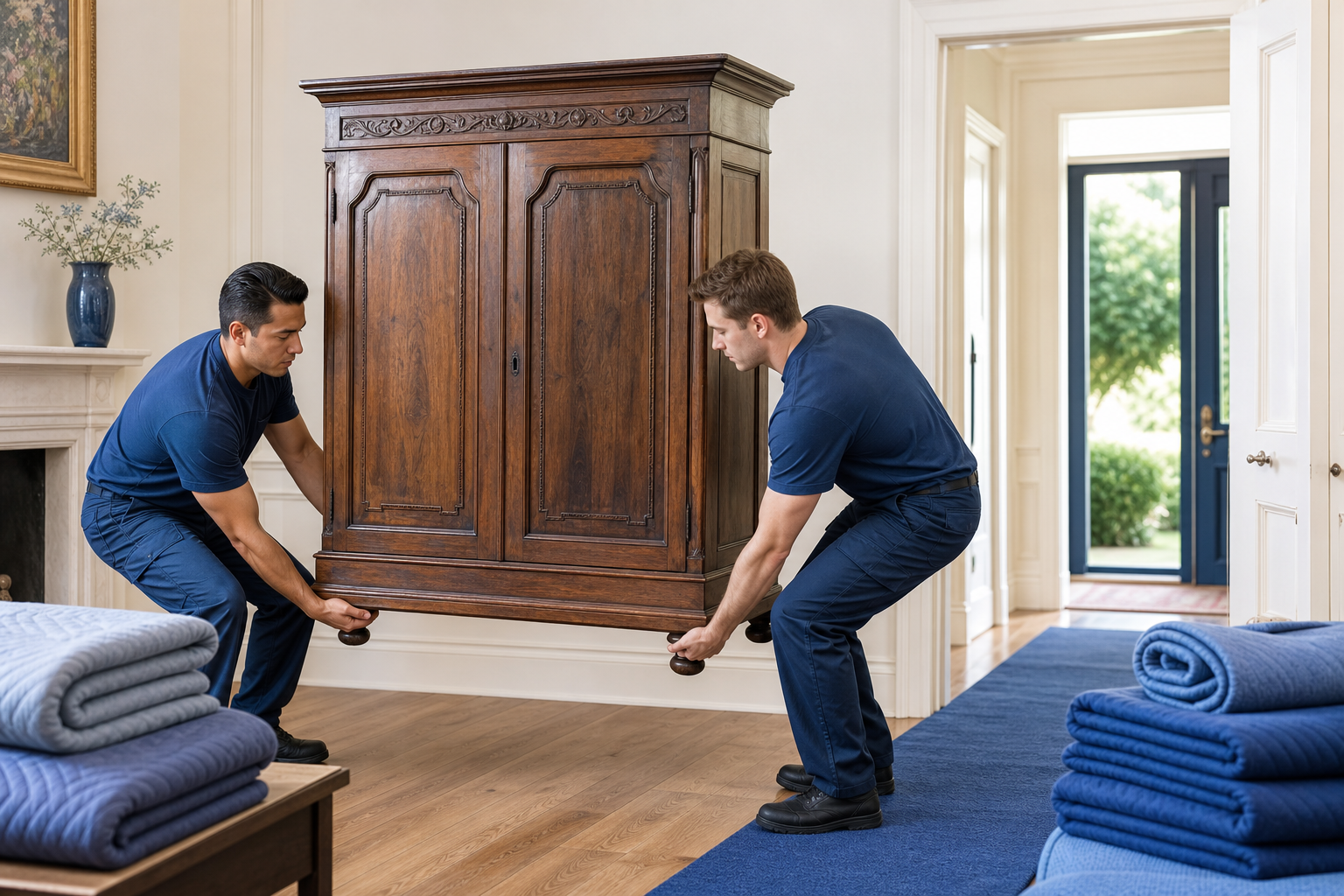
Use the strongest structural points. Depending on the furniture, that may mean an apron, stretcher, lower rail, or seat frame. Do not lift by a tabletop, cornice, arm, back, handle, or ornamental projection. A chair that looks solid can still be damaged if lifted by the arms or back rather than supported from the seat or lower structure.
Cabinets, chests, wardrobes, and desks should be emptied before transport. Removable drawers and shelves may travel separately, while remaining doors and drawers should be immobilized with soft cloth or cotton twill tape. Cabinets generally travel upright inside padding. Tables may be transported top-down on a fully padded surface when that orientation is structurally appropriate.
Secure antiques so vibration and shifting do not cause damage
Inside the vehicle, isolate each antique from the truck wall, floor, and nearby items. Keep pad-wrapped furniture off-stack when possible, prevent protrusions from touching other objects, and place soft padding at every contact point. Straps should be secured to suitable anchor points with padding underneath so they do not dig into wood or upholstery.
Do not place fragile antiques beneath heavy furniture or where another item can fall onto them. Large, stable items should be loaded low with weight distributed carefully. Glass, mirrors, loose components, and boxed collectibles should be positioned where they cannot be crushed.
Labels such as fragile, do not stack, orientation markings, and crate numbers are useful reminders, but they do not replace physical restraint. Road vibration and sudden braking are major risks. Air-ride suspension can reduce shock, while floating crate bases, internal blocking, and properly fitted foam help limit movement inside a crate.
Custom crating is especially appropriate for long-distance moves, unusually shaped objects, old glass, marble, elaborate carvings, highly valuable furniture, and antiques going into storage. A proper crate should support the piece at structurally sound points, prevent surface contact, block internal movement, protect fragile projections, and show orientation clearly.
If a piece has active veneer lifting, major cracks, failed joints, flaking finishes, detached carving, unstable gilding, severe pest damage, or historically important prior repairs, consult a conservator before moving it. The purpose is stabilization and safe handling, not a last-minute cosmetic repair.
When your move includes old or irreplaceable furniture, plan the work before packing day. For help with packing services, local moving, long-distance moving, warehouse storage, moving supplies, or related support, contact D1 Moving and Storage through D1 Moving and Storage.