

Specialty moving services are built for belongings that cannot be treated like ordinary furniture. Pianos, artwork, glass pieces, antiques, collectibles, and emotionally important items each carry different risks, from impact and vibration to moisture, tipping, abrasion, misplacement, and installation errors.
Specialty moving starts with item-by-item risk planning
A careful specialty move begins before the truck arrives. The first step is a detailed assessment of the item itself, not just the room it is in or the category it belongs to (a framed painting behind glass, an unglazed canvas, a glass table, and a grand piano all need different handling decisions). The assessment should record dimensions, weight, materials, construction, current condition, value, handling orientation, detachable parts, environmental sensitivity, and destination requirements. Existing scratches, repairs, unstable joints, loose components, fragile protrusions, and sentimental meaning should also be documented before packing begins.
The route matters just as much as the object. Doorways, stairwells, elevator dimensions, turning space, floors, loading areas, parking, ramps, skids, liftgates, and additional crew needs can all affect the plan. For pianos specifically, route and access checks are part of safer relocation planning, including stairs, elevators, surfaces, and destination conditions described in these piano moving route considerations.
For high-value or irreplaceable belongings, the protection plan should be clear in writing. That plan may include custom packing, custom crating, climate-controlled transport or storage, shock or tilt indicators, installation requirements, insurance valuation, and post-delivery inspection.
A written plan reduces confusion on moving day
Specialty moving is risk-managed logistics. The purpose is not simply to add more padding, but to choose protection based on the actual object, its weak points, and the conditions it will pass through. When the plan is specific, the crew knows what must be protected, what cannot be removed, and what must be verified at delivery.
Artwork and fragile objects need packing that controls shock, moisture, and surface contact
Artwork protection usually begins with a condition report and dated photographs before packing. The record can identify the artist, title, medium, dimensions, frame, glazing, surface marks, cracks, abrasions, previous repairs, labels, and other visible conditions. A matching arrival report helps separate pre-existing conditions from anything that may have happened during handling or transport.
The packing system should protect against physical shock and rapid environmental change. Moisture resistance, puncture resistance, cushioning, insulation, and secure loading all matter because artwork should not shift inside a package or vehicle. For fragile shipments, cushioning depth may need to be substantial, depending on the object and travel conditions.
Contact materials are especially important. Acid-free tissue, glassine, cotton, Mylar, or other suitable barriers can separate delicate finishes from foam, plastic, wood, or other packing components. Plastic should not be placed directly against vulnerable varnish, lacquer, gilding, or similar finishes when it could trap moisture or create a surface reaction.
Humidity can affect canvas, wood, paper, textiles, and mixed-media work. Moisture barriers, insulated crates, silica gel, humidity indicator cards, and data loggers may be used when conditions need to be moderated or recorded. The correct range depends on the object’s materials and any lender or owner requirements.
Artwork should acclimate before final inspection
Climate protection continues after arrival. A cold crate should be allowed to reach indoor temperature before opening in relevant cold-weather circumstances, reducing condensation risk. Artwork should then be acclimatized in a stable room before uncrating or installation, followed by a comparison against the pre-move condition report.
Pianos and glass pieces require specialized handling, not extra muscle
Pianos combine heavy weight with delicate wooden, felt, string, cabinet, pedal, and action components. The objective is controlled movement, not force. Sudden shock, uneven lifting, uncontrolled tilting, excessive pressure on legs or casters, and contact with doorframes or stairs can damage finishes, legs, pedals, action parts, tuning pins, strings, soundboards, or structural joints.
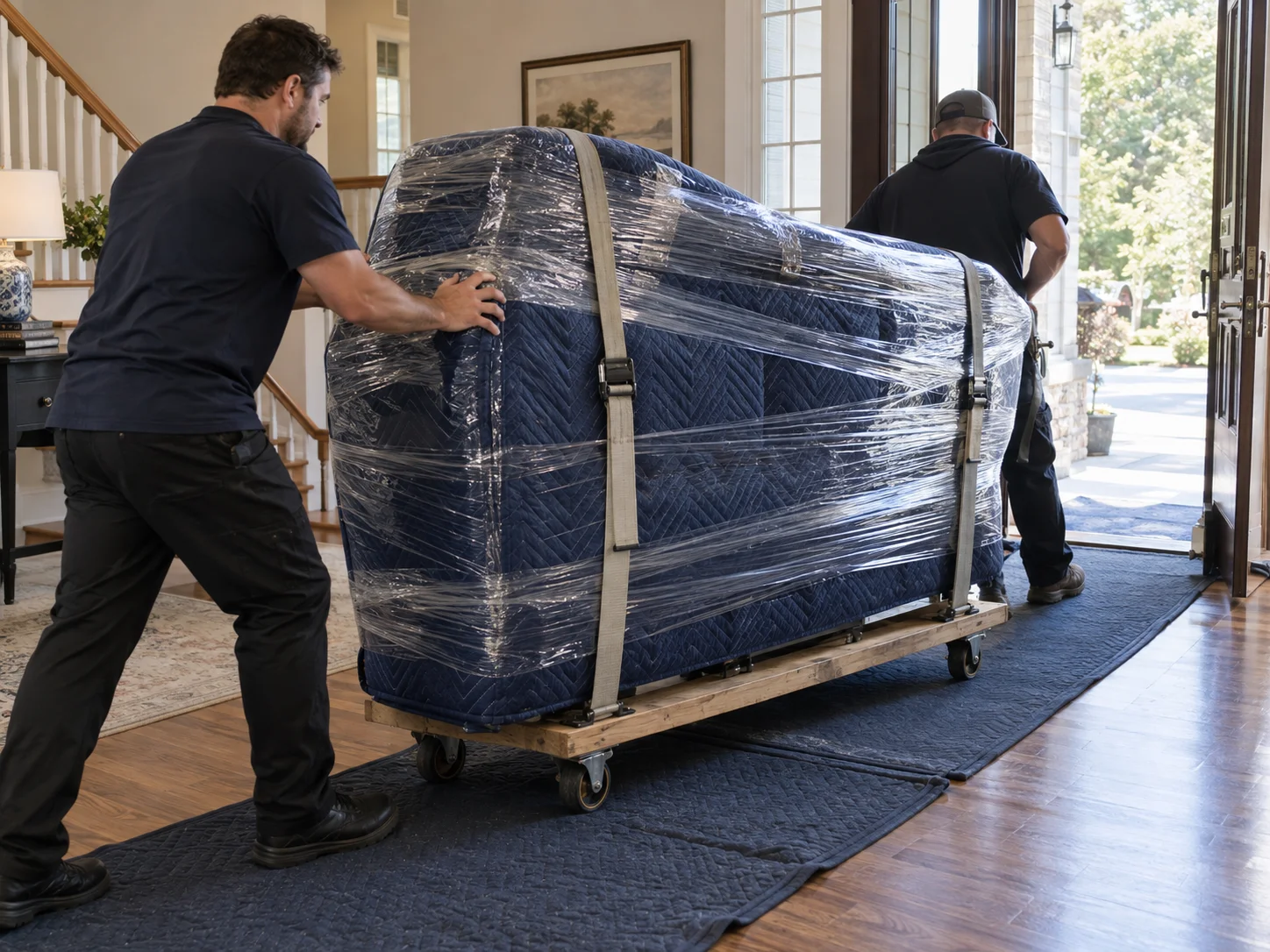
A piano assessment should identify the type of instrument, such as upright, baby grand, concert grand, or another specialty instrument. It should also document dimensions, weight, finish, age, condition, removable components, route, stairs, elevators, floor surfaces, and destination conditions. Professional crews use stabilizing equipment such as padded piano boards or skid boards, specialized dollies, straps, ramps, liftgates, protective blankets, and floor and wall protection, which reflects why piano moving is not DIY.
Temperature and humidity also matter. Changes can cause wood and felt to swell and contract, affecting tone, pitch, and action response. Climate-controlled transport or storage may reduce exposure to heat, cold, moisture, and rapid changes, a concern also reflected in guidance on how weather affects piano moving.
After a move, a piano generally needs time to adjust to its new room before final tuning. Specialist guidance commonly recommends about two to four weeks, with longer adjustment possible after major climate differences. A qualified piano technician should then check more than tuning, including cabinet stability, pedals, keys, action response, soundboard, hardware, noises, and alignment concerns.
Glass furniture and mirrors should be secured against edge impact and flexing
Glass presents different risks: brittle fracture, edge impact, flexing, point loading, vibration, and glass-on-glass contact. Movers should determine whether glass is tempered, laminated, antique, curved, bonded, removable, or structurally integrated. They should also identify whether the base or frame can safely bear the top during handling.
Where safe, glass shelves, doors, tops, mirrors, finials, and detachable parts should be removed, wrapped individually, labeled, and transported separately from the main piece. Large glass panels are generally moved vertically with padded separation and bracing rather than laid flat, where flexing and concentrated pressure may increase risk.
Documentation and communication protect the items that money cannot replace
Emotional pieces require special attention because replacement value does not capture family history, personal loss, provenance, or meaning. A useful move file can include a numbered inventory, photographs, condition reports, declared or appraised values, packing and crate specifications, insurance certificates, bill of lading, delivery instructions, installation plans, and post-delivery condition records.
A chain-of-custody system records who handled each item, which vehicle or facility held it, and when each handoff occurred. Numbered tags can connect the physical item or crate to its photographs, condition notes, inventory entry, and shipping documents. Sealed crates can also carry seal numbers checked at transfer and delivery.
Before moving day, clients should make instructions explicit:
Identify any item that is irreplaceable because of family history, personal meaning, or provenance.
Specify “do not open,” “client hand-carry,” “no substitution,” “no photography,” or access-control instructions when needed.
Confirm who is allowed to approve disassembly, repair, placement changes, or deviations from the plan.
Request milestone updates when a high-value or emotionally significant item changes hands or locations.
Inspect items before final sign-off and record even minor changes against the original notes and photographs.
Insurance and valuation should also be clarified before the move. Clients should confirm whether coverage is based on replacement value, declared value, market value, or another basis. It is also important to understand whether coverage includes packing, transit, temporary storage, installation, restoration, pairs or sets, and pre-existing conditions.
Installation is another risk stage. Fine art and delicate objects may need sequenced unpacking, retained packing materials, approved placement, leveling, securing, debris removal, and final condition reporting. For galleries, designers, and businesses, professional coordination can include delivery windows, room-by-room placement, contractor coordination, and sign-off by a designated representative, similar to the controlled process used in fine art transport and crating.
If you are planning a move involving pianos, artwork, glass furniture, antiques, collectibles, or sentimental pieces, D1 Moving and Storage can help coordinate careful packing, moving, storage, and placement. Call us today at (804) 380-7224 to discuss the items that need extra care and the best way to protect them from pickup to delivery.



.webp)


.webp)
.webp)


.webp)


.webp)
.webp)

.webp)