Moving heirloom furniture takes more care than moving ordinary household pieces. Inherited tables, cabinets, chairs, mirrors, and bedroom sets often carry fragile finishes, aged joints, delicate veneer, and sentimental value that cannot be replaced. A safe move starts before anything is wrapped, lifted, or loaded.
A Pre-Move Furniture Inspection Protects Sentimental Pieces Before Packing Begins
The most important protection happens before packing materials come out. Each heirloom piece should be inspected one item at a time with the owner present. This creates a shared record of condition, helps identify weak points, and prevents avoidable handling mistakes.
A useful inspection includes photographs from every side, plus notes about maker’s marks, dimensions, previous repairs, scratches, cracks, loose hardware, lifted veneer, finish wear, and instability. Federal moving guidance also expects inventories to note unusual wear or damage and be signed by both parties, which makes a careful written record more than a courtesy.
Antique and inherited furniture can look stable while sitting in place, then fail when tilted or carried. That is why movers should check visually and gently, not by forcing movement. The inspection should look for wobbly legs, open mortise-and-tenon or dovetail joints, loose feet, sagging shelves, split wood, flaking finishes, brittle gilding, cloudy lacquer, detached carvings, and drawers or doors that no longer align.
Separate components deserve separate attention. Glass doors, mirrors, shelves, marble tops, drop leaves, hinges, drawer pulls, locks, casters, clock parts, and other removable or fragile elements should be checked individually. Repaired glass or ceramics are weaker than unrepaired examples, and decorative projections such as handles, spouts, knobs, and carvings should never be treated as lifting points.
Some pieces should be flagged for conservation help before the move. Active veneer lifting, structural breaks, flaking or powdering finishes, severe insect damage, water damage, loose carvings, or failing repairs can all make transport riskier. If a fragment comes loose, place it in a labeled, sealable bag and keep it with the furniture. Do not tape it back onto the surface.
Finish-Safe Wrapping Helps Prevent Damage to Veneer, Paint, Lacquer, and Gilding
Heirloom furniture is often vulnerable because the surface is part of the history of the piece. A finish may include shellac, lacquer, paint, gilding, upholstery, veneer, inlay, or aged wood that reacts poorly to pressure, adhesive, plastic, or moisture. Wrapping should protect the surface without trapping it against a harmful material.
Wood responds to humidity by swelling and shrinking. Museum guidance commonly recommends about 45 to 55% relative humidity for wooden objects, with changes kept small. Humidity above 65% can raise mold and corrosion risks, while very dry conditions can make glue and finishes brittle.
Light and heat also matter during preparation, loading, and storage. The Preventive Conservation guidance notes that light damage is cumulative and irreversible. Direct sunlight can darken light woods, bleach dark woods, and cause finishes to discolor, become opaque, crack, or become brittle.
Before any blanket or foam is added, the surface should be protected with a breathable, nonabrasive barrier. The goal is to keep padding from rubbing the finish while avoiding materials that can stick, stain, or trap moisture. This is especially important for veneered, painted, gilded, lacquered, or unstable surfaces.
Use clean unprinted paper, acid-free tissue, cotton, or an appropriate conservation cover as the first layer.
Do not place stretch film, plastic wrap, adhesive tape, newspaper, or rubberized materials directly against antique wood or delicate finishes.
Avoid household sprays, oils, silicone polishes, ammonia, bleach, alcohol-containing window cleaners, abrasive metal cleaners, and untested solvents.
Dust only when the surface is stable, using a soft brush or cloth with minimal pressure.
Do not wet-clean unfinished wood, unstable finishes, flaking paint, or degraded lacquer before a move.
If waxing is appropriate, use a thin, colorless, fragrance-free product sparingly. Generally, keep oils away from historic furniture. When a finish is degraded, painted, lacquered, flaking, or otherwise unstable, cleaning should be left to a conservator rather than attempted during move preparation.
Careful Packing and Handling Reduce Stress on Old Joints and Fragile Details
There is no single packing method that fits every inherited piece. A carved sideboard, marble-top table, glass-front cabinet, drop-leaf desk, and upholstered chair each has different weak points. Packing should be based on material, weight, shape, construction, and the parts most likely to fail under pressure.
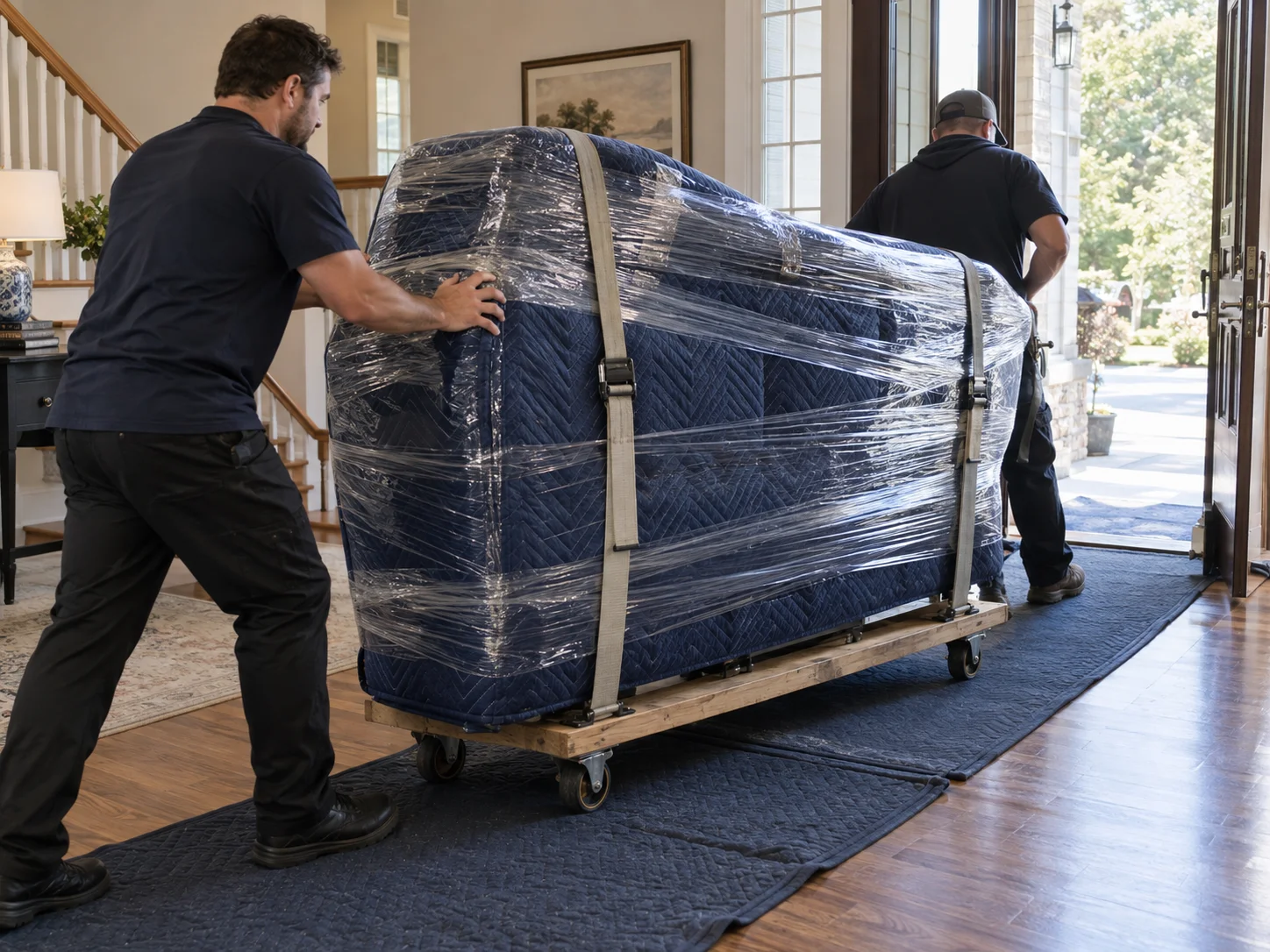
Layered protection is usually safer than relying on one thick outer wrap. A finish-safe inner barrier protects the surface. Soft padding reduces abrasion. Foam or blankets absorb impact. An outer layer helps limit movement during carrying and loading. Heavy, unusually valuable, or fragile pieces may need a fitted crate with padded, nonabrasive supports.
D1 Moving and Storage’s packing, moving, storage, and installation teams approach inherited furniture by looking at how each piece is built, what can safely be removed, and where stress should be avoided during transport.
Carvings, moldings, marquetry, inlay, corners, feet, finials, and protruding hardware need shaped protection that does not press directly on the detail. Moving blankets alone may not protect applied decoration or lifted veneer well enough. For glass, mirrors, marble, ceramics, and fragile display parts, rigid protection or custom crating may be safer than soft wrapping alone.
Disassembly should reduce risk, not create new damage
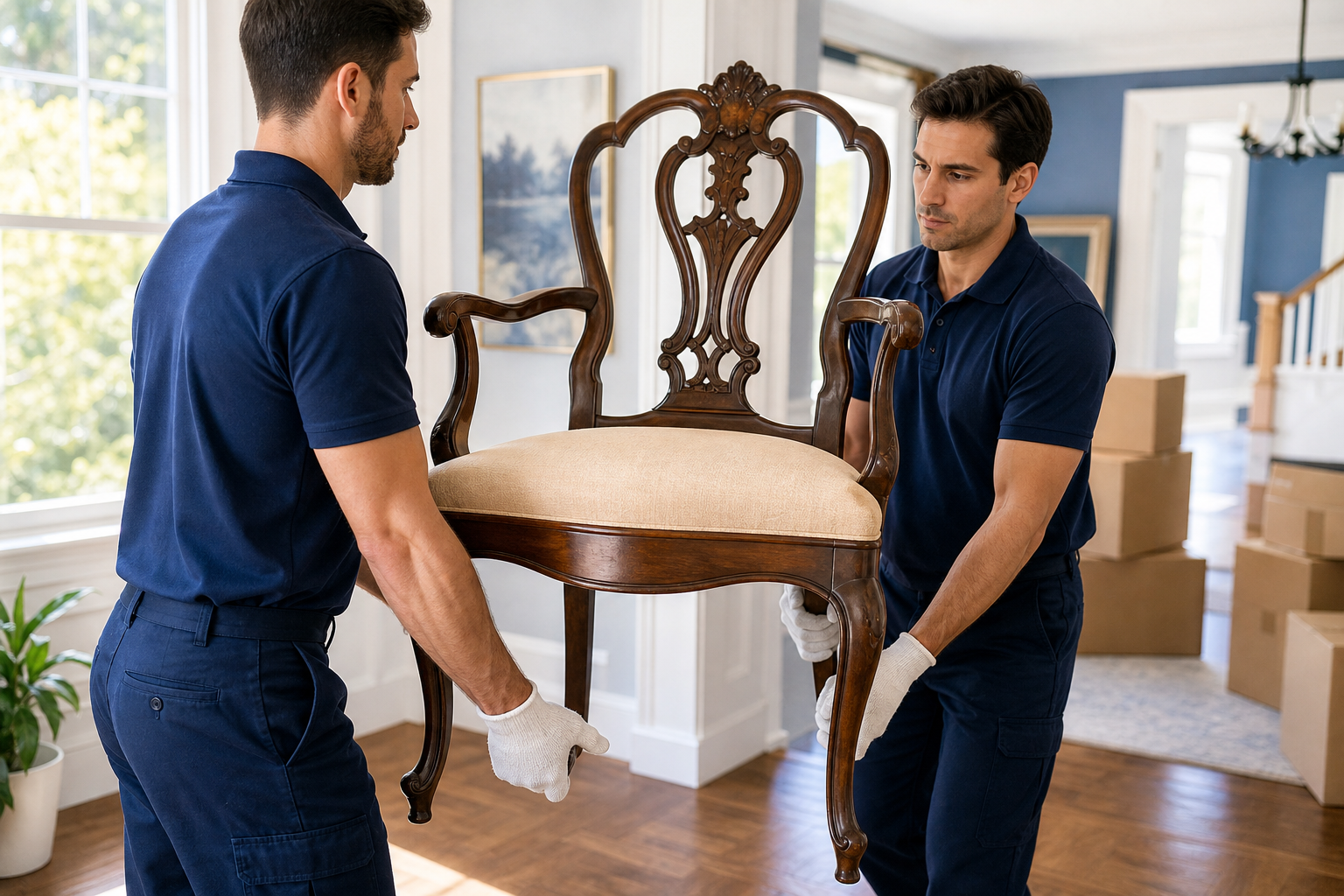
Remove only the components that are designed to come off safely. That may include loose drawers, removable shelves, detachable legs, mirrors, drop leaves, cabinet contents, marble tops, cabinet doors, bed rails, or modular case sections. Each part should be wrapped separately, labeled by location, and matched with hardware in a labeled bag.
Disassembly is not automatically safer. Old screws can strip, irregular hardware may be hard to replace, and glued joinery can split if forced apart. Avoid separating glued joints, forcing stuck screws, dismantling original joinery, or removing sound hardware just for convenience.
Doors, drawers, and drop leaves should be secured with cotton twill tape or soft cord, never adhesive-backed tape. Drawers should be emptied when contents could shift, crack a drawer front, or make the case unstable. If removing drawers safely reduces weight or keeps them from falling out, that can be the better handling choice.
The Right Moving Plan Includes Documentation, Valuation Review, and Post-Move Care
An experienced antique-moving plan should be specific. The process should include an on-site or detailed virtual survey, written inventory, high-resolution photographs, pre-existing-condition notes, component labels, route measurements, loading instructions, and final inspection. Specialty handling depends on knowing what each piece needs before it is lifted.
Customers should ask who is responsible for the condition report and how comparable pieces have been handled. It is reasonable to discuss crew training, references, equipment, crate construction, disassembly, reassembly, storage, climate-sensitive transport, and insurance or valuation terms. A trained crew should be able to distinguish a load-bearing rail from a fragile leg, carving, or decorative panel.
For interstate moves, high-value inherited pieces should be disclosed in writing. Federal guidance defines an extraordinary-value article as one worth more than $100 per pound, including antiques, and movers may be able to limit liability unless those items are specifically listed on shipping documents. Released Value protection generally provides only 60 cents per pound per article, while Full Value Protection can involve charges, deductibles, and policy-specific limits.
After delivery, inspect every heirloom piece before the crew leaves. Compare the furniture with the pre-move photos and signed condition report under good lighting. Check tops, bottoms, backs, feet, corners, veneer edges, carvings, glass, mirrors, hardware, drawers, doors, hinges, and detachable components.
If anything has changed, document it right away. Photograph new cracks, scratches, dents, lifted veneer, finish haze, loose joints, missing hardware, broken glass, or alignment changes. Save detached parts and packing materials, then follow the applicable claim procedure rather than attempting an immediate repair.
Once the piece is placed, keep it away from direct sun, heat sources, vents, damp exterior walls, and areas with rapid temperature or humidity changes. The Care of Antiques guidance warns against many commercial products that can leave residue, react with historic finishes, or remove important surface layers. Gentle dusting, stable conditions, limited handling, and conservation advice are safer than quick fixes with household glue, polish, or oil.
If you are preparing to move inherited furniture, D1 Moving and Storage can help plan the packing, handling, transport, storage, and reassembly steps with care. Call us today at (800) 676-3241 to discuss your move.