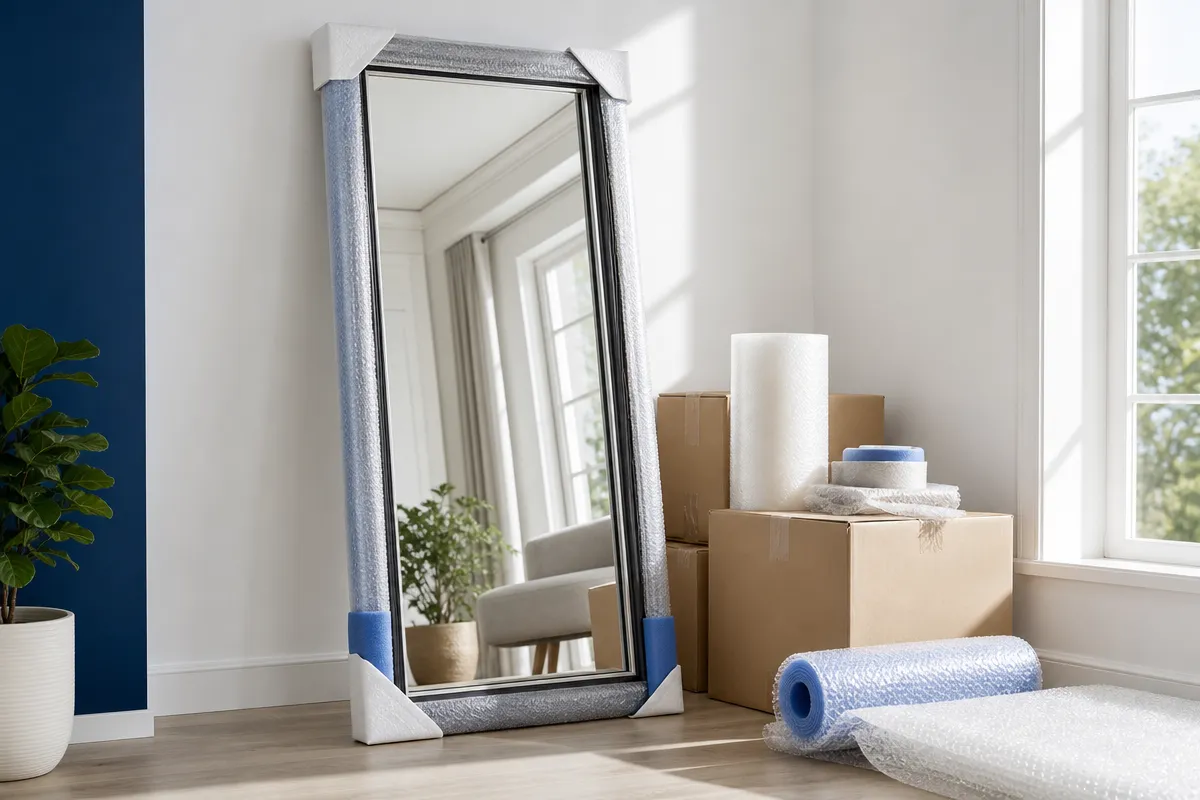
Learning how to pack vases correctly matters because hollow items need internal support and outside cushioning. A vase can look sturdy, but rims, necks, handles, repaired areas, thin glass, and decorative protrusions can crack when pressure is uneven or the item shifts inside a box.
D1 Moving and Storage helps residential and commercial customers across Northern VA, Washington DC, Richmond, Virginia Beach, Charlottesville, Roanoke, and surrounding service areas prepare fragile décor for local moving, long distance moving, storage, and related relocation needs.
If you have questions about preparing fragile items before your move, you can reach out through D1 Moving and Storage.
Start by documenting each vase before any packing begins
Good vase packing starts before the first sheet of paper touches the piece. Photograph each vase from multiple angles, then record its material, dimensions, condition, and replacement value. This is especially useful for antique, sentimental, signed, hand-painted, crystal, repaired, or high-value pieces.
Documentation creates a practical record of what existed before packing. If a vase has a hairline crack, repaired handle, worn finish, loose decorative part, or fragile rim, noting that condition helps you choose the right packing method. It also helps when discussing professional packing, valuation, storage, or claims questions with a mover.
Before wrapping, empty every vase completely. Clean it carefully and let it dry. Dirt and grit can scratch surfaces during a move, while trapped moisture may create problems in storage. A clean, dry surface is safer for glass, crystal, ceramic, pottery, and antique finishes.
Use clean, unprinted packing paper for anything that directly touches the vase. Newspaper and printed paper can transfer ink, especially when pressed against finishes for hours or days. For delicate ceramic, pottery, or antique surfaces, soft foam or acid-free tissue is safer.
The goal is not to wrap quickly. It is to understand what the vase needs. A tall narrow glass vase, a wide pottery piece, and an asymmetrical decorative vase have different weak points, balance, and pressure risks.
Choose packing materials that protect the finish and absorb impact
Vases need layered protection. The inner layer should be gentle on the finish, while the outer layer absorbs jolts, vibration, and pressure. Using the wrong material in the wrong place can cause damage even when the box appears padded.
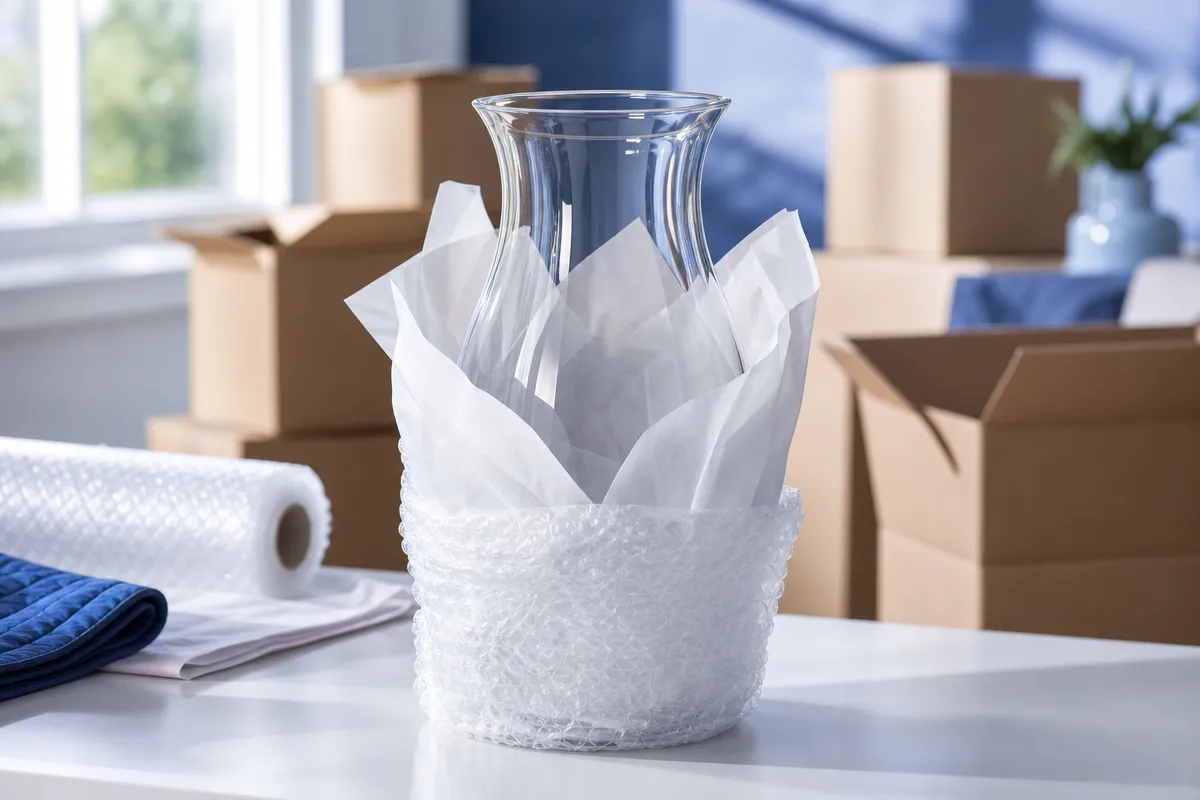
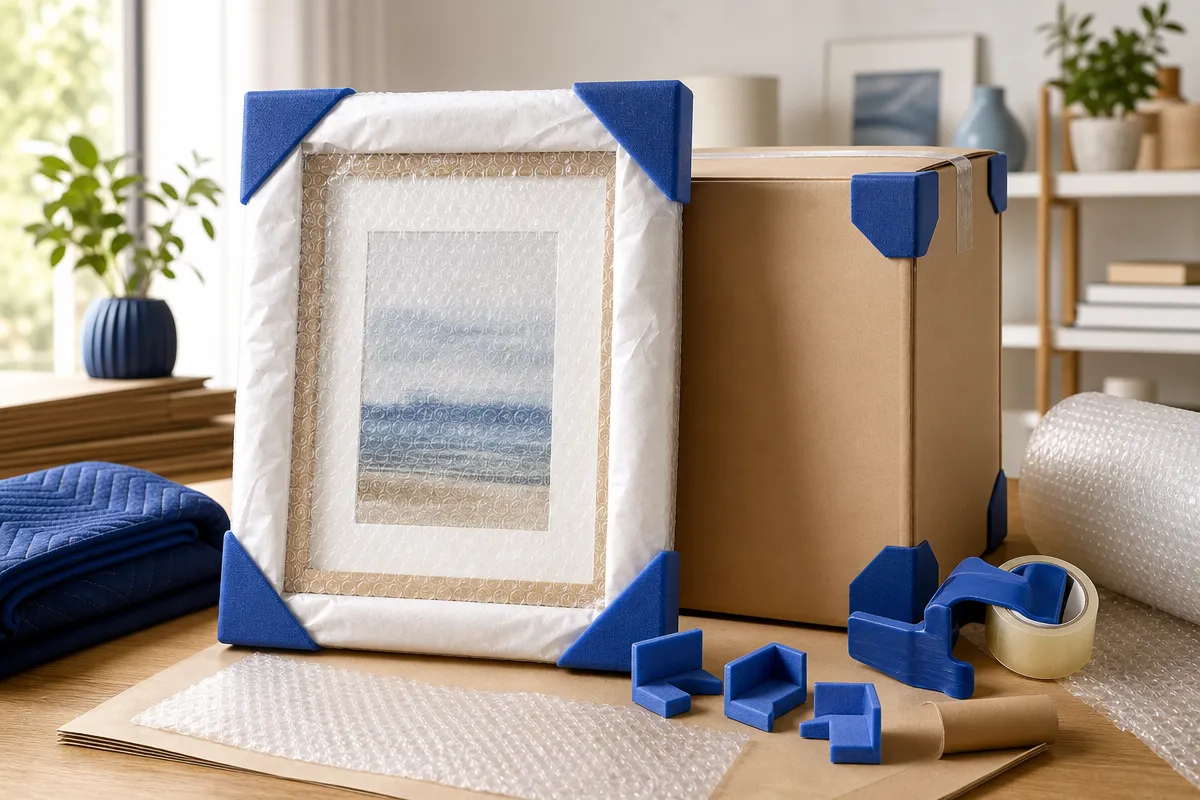
Clean, unprinted packing paper is a good direct-contact layer for many glass, crystal, ceramic, and antique finishes. Bubble wrap or soft foam can then be added outside that paper as an impact layer. Tape should secure the outer wrapping to itself, not to the vase. Adhesive directly on glass, ceramic, painted surfaces, or antique finishes can create avoidable problems.
Professional movers commonly use foam pouches, acid-free tissue, sturdy corrugated cartons, cell dividers, and double-wall boxes for fragile items. The choice depends on value, shape, material, and distance.
Choose a box roughly one-third larger than the vase, so padding can surround the item without forcing it into place. Too small a box compresses the wrapping. Too large a box allows movement unless carefully filled.
Several materials are especially useful when packing vases:
Clean, unprinted packing paper for direct contact with glass, crystal, ceramic, and many finished surfaces.
Acid-free tissue for delicate, antique, or finish-sensitive pieces.
Bubble wrap or soft foam as an outer layer that cushions impact.
Double-wall cartons for valuable, heavy, fragile, or long-distance pieces.
Cell dividers or fitted supports when pieces must remain separated.
Strong packing tape to reinforce box bottoms, seams, and closures.
Do not rely on loose packing peanuts alone for delicate vases. They can shift during handling and allow the piece to move. Movement inside the carton is a common cause of cracks, chips, and broken protrusions.
Fill hollow interiors gently before wrapping the outside
A hollow vase needs support inside the cavity as well as protection outside the body. This is one of the key differences between packing a vase and packing a solid decorative object. If the walls flex or receive uneven force, the item may crack even if the outside has been wrapped.
Loosely fill the inside with crumpled packing paper or soft acid-free tissue. The filling should support the walls and reduce internal stress if the box is jolted. It should not be packed tightly. Too much pressure inside can damage thin glass, weak rims, narrow necks, repaired areas, handles, or other vulnerable points.
After filling the interior, protect the rim and opening. Add several layers of paper around the top before wrapping the body. Rims are often thin and exposed, making them vulnerable when a box shifts, tilts, or receives pressure from above.
Next, wrap the body in paper. Keep the layers smooth enough to avoid pressure points, but thick enough to separate the surface from the outer padding. Then add bubble wrap or foam over the paper. Secure the outer material around itself with tape, making sure the tape never touches the vase directly.
Pay extra attention to the base, rim, neck, handles, flared edges, and decorative protrusions. These areas should be padded individually instead of treated as part of one general bundle. A handle can break inside a heavily wrapped package if pressure is transferred directly into it.
Glass and crystal benefit from several light protective layers rather than one rigid, compressed layer. Thin glass and crystal should not touch another object, a cardboard edge, or hard filler. For ceramics and pottery, soft foam or acid-free tissue should sit against the finish, with bubble wrap outside for impact protection.
Pack tall, wide, and irregular vases according to their shape
Shape determines packing strategy. A tall, narrow vase has different risks than one that is wide, heavy, asymmetrical, or decorated with fragile attached parts. The right box and support system should fit the object, not force the object to fit a standard carton.
Tall narrow vases need upright support from base to rim
Tall, narrow vases should be wrapped from base to rim and placed in a tall specialty box, such as a lamp or vase carton. Keep the vase centered with cushioning below, around the sides, and above the rim. The carton should be tall enough that the top cannot be crushed during normal handling.
When the base is the strongest support point, upright placement helps protect the rim and reduces sideways impact. Still, upright labels do not replace interior packing. A tall vase must be immobilized so it cannot lean, rattle, or strike the sides.
Wide and oversized vases may need stronger cartons or custom crates
Wide or oversized vases should not be forced into ordinary boxes. Use a strong box or custom crate when the item is difficult to stabilize, unusually shaped, extremely valuable, or vulnerable because of fragile protrusions. Build a cushioned base, support the widest section, and prevent contact with every wall of the container.
Custom crating is especially useful when a vase has a high value, an unusual center of gravity, or a shape that cannot be protected with loose fill and standard cushioning. A crate can be designed around the piece rather than relying on a generic box.
Irregular vases need fitted support around fragile details
Asymmetrical vases, sculptural pieces, narrow necks, flared rims, handles, and attached decorative parts need extra planning. Each projection should be padded separately. Fitted supports made with foam or formed cardboard can stabilize the piece without forcing pressure onto the weakest area.
More wrapping is not always safer. Excessive pressure can damage an old finish, fragile carving, loose component, thin rim, or repaired section. The goal is controlled support without compression.
Build a box that keeps the vase immobilized during handling
The outside box is only effective if the vase cannot move inside it. Start by reinforcing the bottom and seams with strong packing tape. A fragile item should never depend on a weak carton bottom, especially if the vase is heavy or the move is long distance.
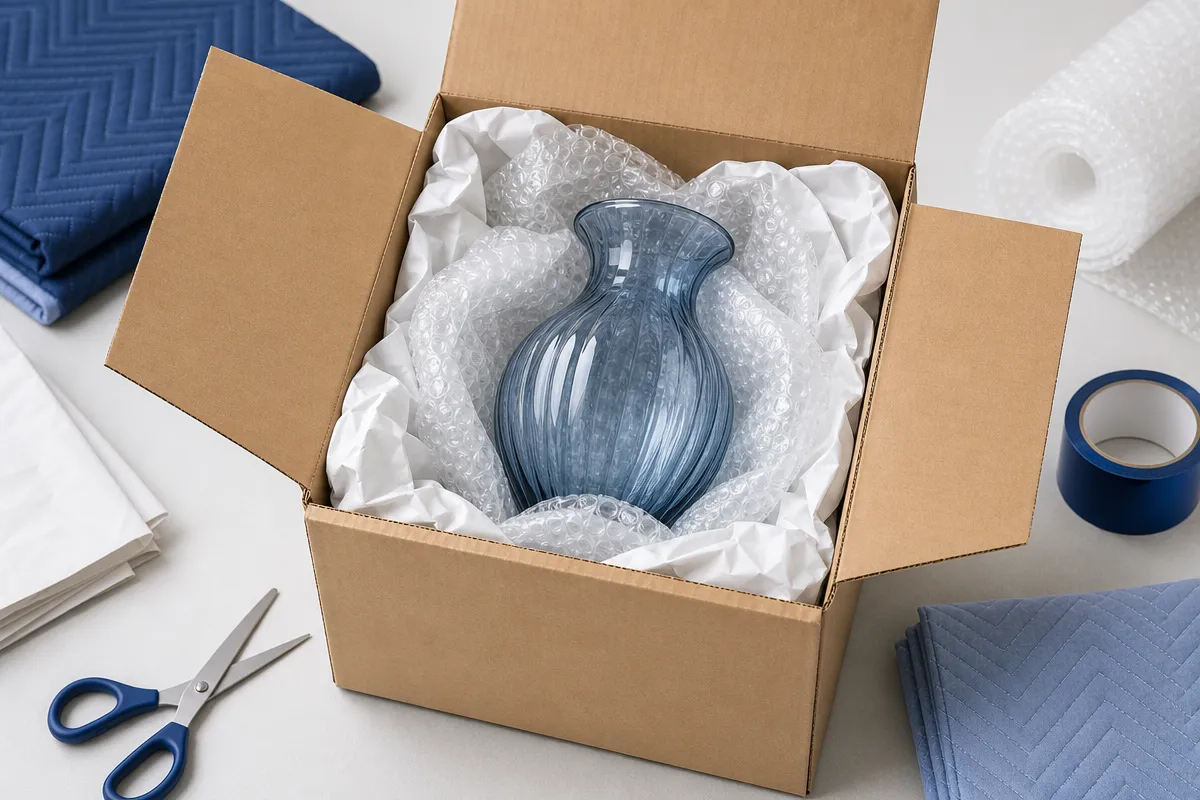
Place a cushioning layer across the bottom of the box before inserting the wrapped vase. Set the vase in the center. Then fill all gaps around the sides and top with crumpled packing paper, foam, or suitable air cushions. The item should be surrounded, supported, and separated from every box wall.
A properly packed carton should not rattle. After sealing, lift it gently and carefully tilt it. If you feel or hear movement, reopen the box and add cushioning. Fragile labels cannot compensate for a loose pack.
For high-value ceramics, antiques, and collections, double-boxing can add protection. This method places a padded inner carton inside a larger heavy-duty carton with cushioning on every side. One professional technique uses at least two inches of cushioning around the inner box. Archival materials may be preferred for museum-grade pieces or long-term storage.
D1 Moving and Storage can provide fragile-only packing when customers want professional help with vulnerable décor such as glassware, crystal, ceramics, artwork, and vase collections, while still handling other parts of the move themselves.
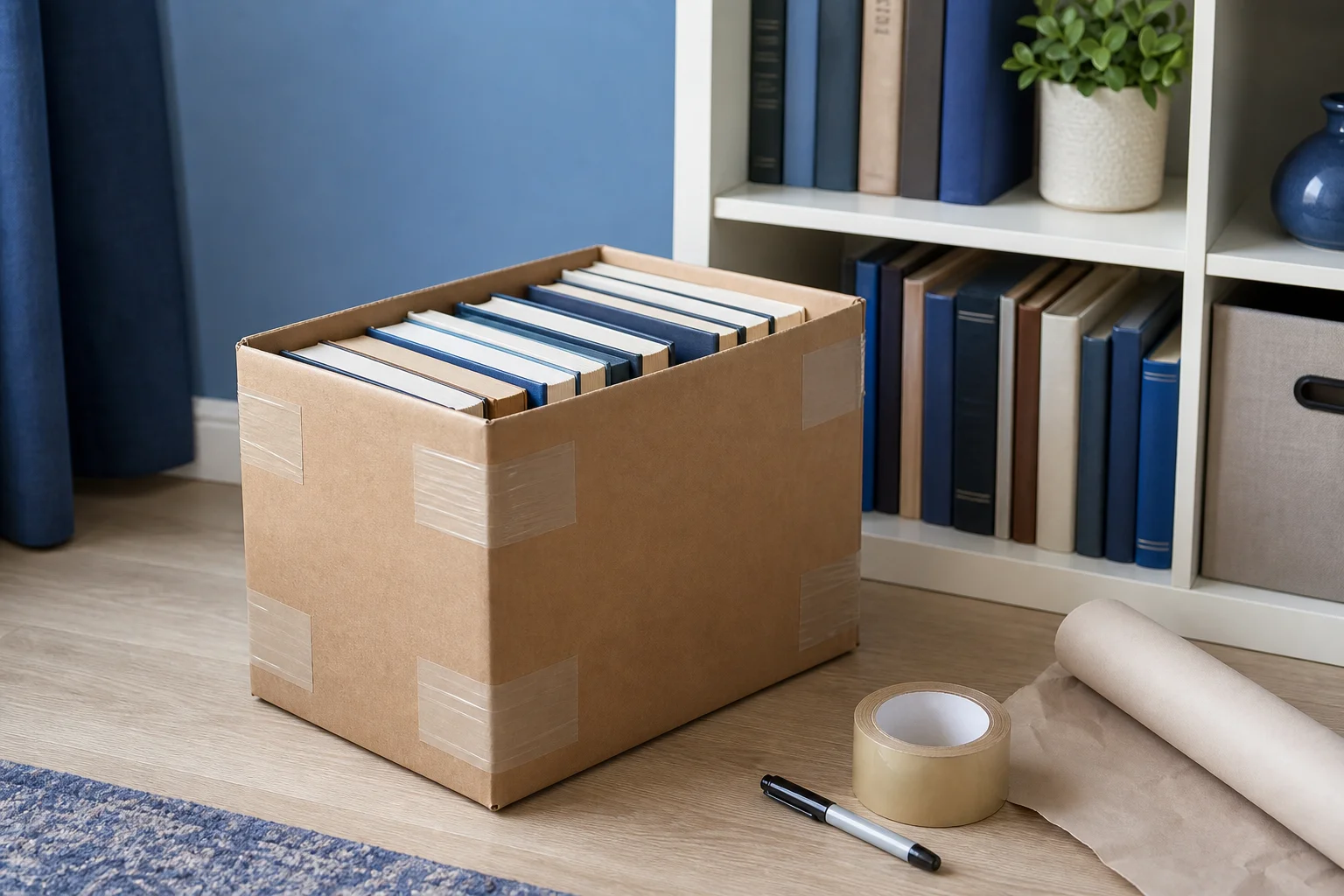
When labeling the box, mark multiple sides, not just the top. Use clear wording such as “Fragile,” “Glass,” “Handle with Care,” and “This Side Up.” An item description or inventory number can also help identify valuable pieces. The Abc's of Moving resource reinforces the importance of careful handling for antiques, breakables, and collectibles.
Adjust vase packing for local moves, long-distance moves, and storage
The right packing method depends partly on what happens after the box is sealed. A short local move, a long-distance relocation, and a storage period all create different risks. Handling, vibration, stacking, compression, and moisture exposure should shape the plan.
For a short local move, individually wrapped vases can travel safely in reinforced, cushioned cartons if they remain immobilized and are carried separately from heavy objects. Fragile-only packing is practical when only the most delicate belongings need professional handling.
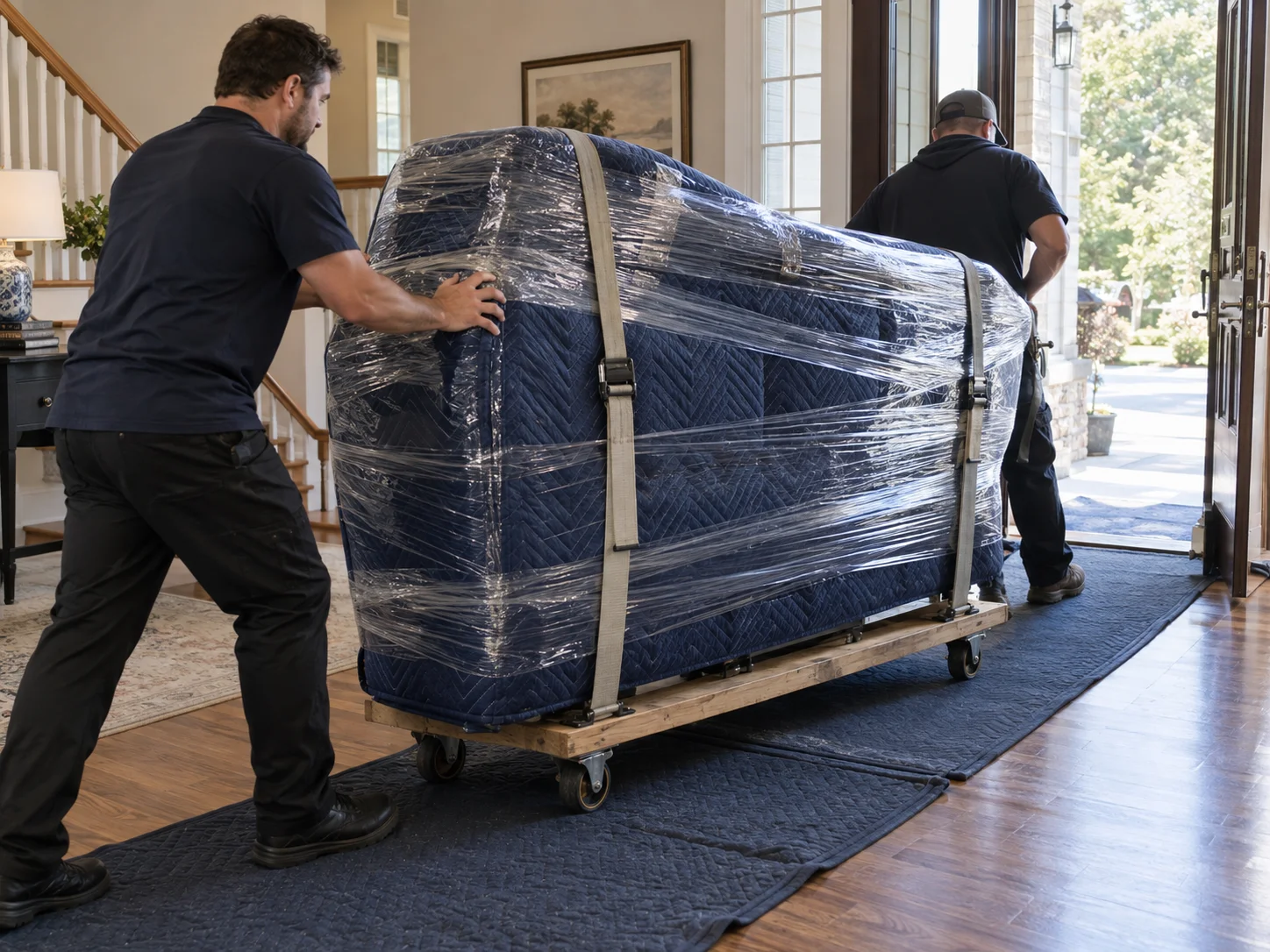
Long-distance moves expose boxes to more handling, vibration, stacking, and compression. Use double-wall cartons, smaller manageable boxes, double-boxing for valuable pieces, and clear upright markings. Fragile boxes should not be placed beneath heavy furniture or dense cartons.
For storage, use dry, clean, climate-controlled conditions when the vase’s material, finish, age, or value warrants it. Keep cartons off concrete floors on pallets or another moisture barrier. Avoid stacking fragile boxes beyond what the packaging can support, and leave the vase immobilized rather than repeatedly unpacking it.
Commercial moves require another layer of organization. Businesses moving displays, showroom inventory, hospitality décor, or office collections should create an inventory with item numbers, photographs, condition notes, and destination locations. Dedicated cartons or crates help reduce the risk that heavy commercial equipment will be loaded against fragile décor.
Before moving or storing a vase collection, review these common mistakes:
Leaving hollow interiors unsupported.
Allowing glass, crystal, or ceramic pieces to touch each other.
Using newspaper that can transfer ink.
Leaving empty space inside the carton.
Overpacking in a way that creates pressure on rims, handles, or repairs.
Taping directly to the vase or its finish.
Placing vases on their sides without designed support.
Relying on loose filler that shifts during handling.
These problems often come from rushing. Taking time to support the interior, cushion the exterior, stabilize the box, and label the carton clearly can prevent many avoidable breaks.
Know when professional vase packing or custom crating is the safer choice
Some vases should not be packed like ordinary household goods. Professional packing is recommended for antique, sentimental, irreplaceable, museum-quality, signed, hand-painted, crystal, repaired, unusually large, or high-value pieces. It is also sensible for collections with many items or for customers who cannot safely lift and stabilize them.
Professional packing may include custom crates, dedicated handling plans, specialized crews, secure transportation, and storage. Before booking, request an onsite or virtual assessment for oversized and unusual pieces. Confirm the packing materials, crate design, labeling process, loading plan, transportation approach, storage needs, and valuation or claims details.
Ask whether the mover’s valuation or claims coverage applies to items packed by the customer. Some policies limit liability for self-packed goods, so handle this question before the move rather than after damage occurs.
A custom crate is especially appropriate when a vase is difficult to stabilize, has fragile protrusions, must travel long distance, or will remain in storage for an extended period. For large collections, professional packing can reduce handling errors by using consistent wrapping methods, inventory identifiers, fitted dividers or crates, and a loading plan that separates fragile cartons from heavy goods.
If you are preparing vases, crystal, ceramics, or fragile décor for a move, D1 Moving and Storage can help with packing services, local moving, long distance moving, warehouse storage, and related support. Start your move planning by visiting D1 Moving and Storage.