Learning how to pack mirrors the right way can prevent cracked glass, chipped frames, and damage caused by pressure during a move. Mirrors and framed glass need more than a blanket and tape. They need the right box, stable cushioning, protected corners, and careful upright handling from the first wrap to final installation.
Choose Mirror Packing Supplies That Protect the Glass and Frame
A mirror is most vulnerable at its edges, corners, and glass surface. The goal is to keep impact away from those areas while preventing the mirror from shifting inside the carton. A purpose-built mirror or picture box is the best starting point because it is designed for flat, fragile items.
Telescoping mirror cartons or adjustable two-piece boxes are useful because they can fit different heights while still leaving room for cushioning. A box roughly 30% larger than the mirror gives enough space for protective material without forcing the glass into a tight carton. A box roughly 30% larger helps reduce direct pressure on the glass.
For oversized, unusually shaped, antique, or high-value mirrors, an ordinary box may not provide enough support. In those cases, a custom carton or wooden crate is generally safer than standard packing materials.
Before wrapping begins, gather everything in one place. This reduces the chance that a partially wrapped mirror gets moved, leaned against a wall, or handled without full protection. The supplies should support three jobs: surface protection, impact cushioning, and carton stability.
Painter’s tape or masking tape for the glass surface
Strong packing tape for the outside wrapping and carton seams
Packing paper for the first protective layer
Bubble wrap for cushioning around the protected mirror
Moving blankets for soft padding during wrapping, carrying, or loading
Rigid cardboard or foam board for front and back pressure protection
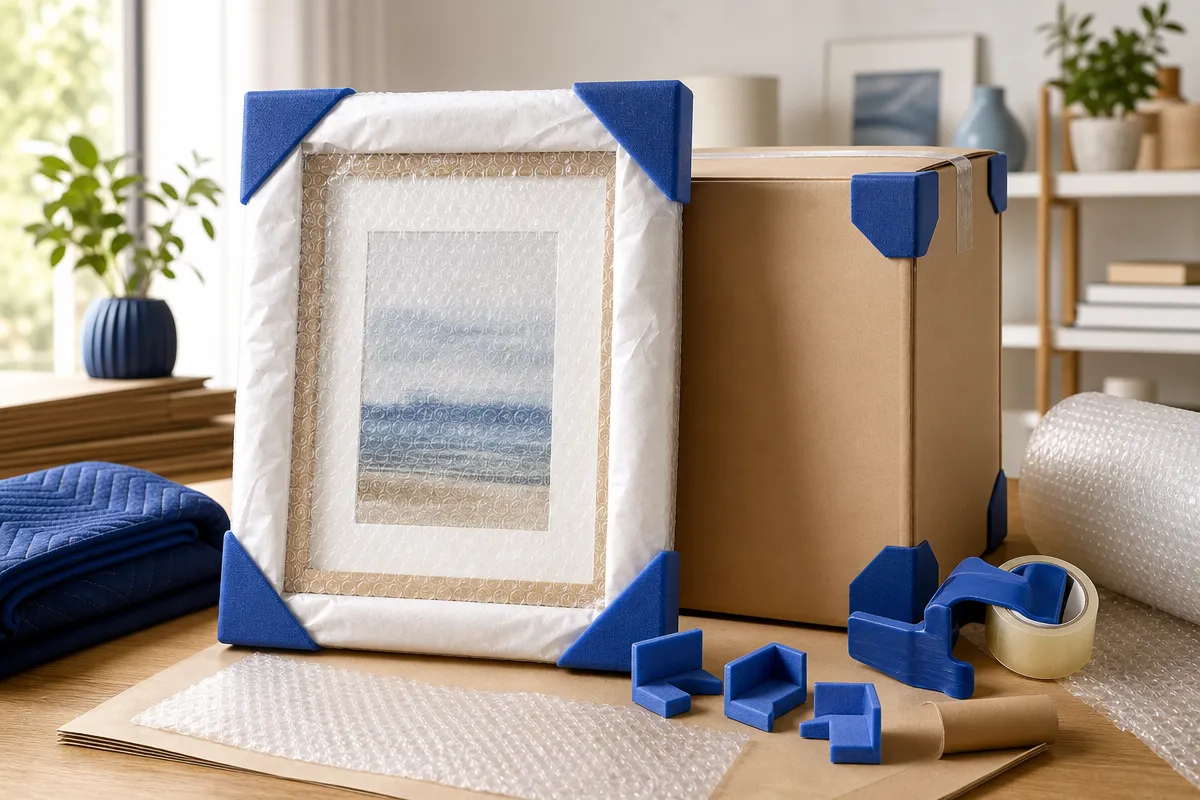
Cardboard or foam corner protectors for exposed frame corners
Crumpled paper, foam, towels, or clean padding to fill empty box space
Avoid packing peanuts because they shift during transit and can leave the mirror with uneven support. Use one box per mirror whenever possible. If multiple framed items must share a container, each piece should be separated with rigid cardboard so frames and glass never touch.
Prepare the Mirror Before Wrapping to Reduce Scratches and Stress
Start on a clean, padded, level surface, such as a bed, table, or blanket-covered floor. Clean and dry the glass before wrapping. Dust or grit trapped under packing material can scratch the surface while the mirror is being handled.
Take photos of the mirror before packing. Record existing chips, cracks, frame wear, decorative damage, or loose areas. These photos give you a clear reference when the mirror is unpacked and inspected later.
Painter’s tape helps hold damaged glass together if impact occurs
Apply painter’s tape or masking tape in a large X across the glass, running from corner to corner. This step helps hold glass together and distributes some impact forces if the surface is struck. Avoid aggressive adhesives that may leave residue or damage finishes.
Do not tape directly onto a delicate frame finish, ornamentation, or any surface that could be harmed by adhesive. The tape belongs on the glass only, and it should be removed carefully after the move.
Rigid panels protect the mirror from pressure points
Cut rigid cardboard or foam board to roughly match the mirror’s front and back dimensions. Place one panel on each side before adding outer cushioning. These panels help spread outside pressure so a strap, nearby item, or carton edge does not press directly against the glass.
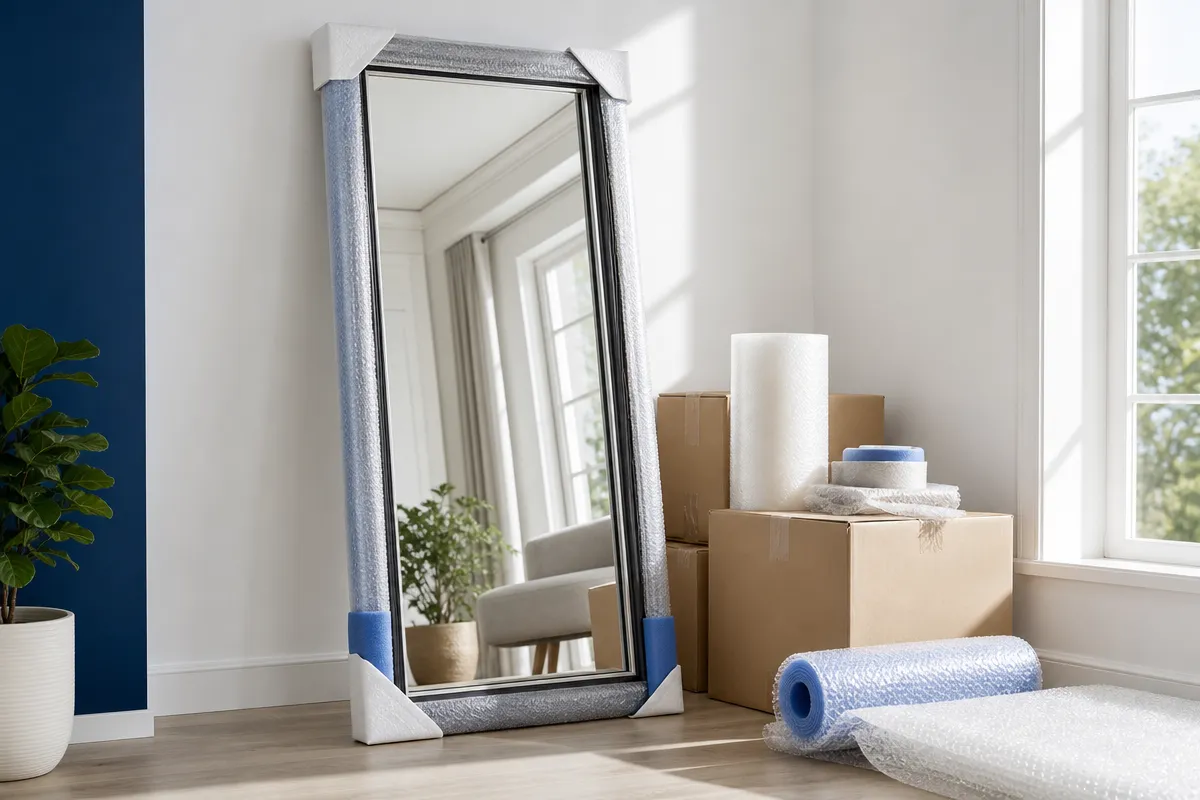
Corner protection matters just as much as surface protection. Exposed corners should be covered with foam or cardboard protectors, especially on frames with fragile joints, bevels, gilding, carved details, or projecting ornamentation. Bubble wrap alone should not be relied on for corner defense.
If the mirror has detachable stands, hooks, brackets, or hardware, remove them before wrapping. Wrap and label those parts separately so they do not press into the glass or frame inside the carton.
Wrap and Box the Mirror So It Cannot Shift in Transit
The wrapping process should build protection in layers. Each layer has a different purpose. Paper or a moving blanket protects the finish, rigid panels reduce pressure on the glass, bubble wrap cushions impact, and the carton holds the bundle in a stable upright shape.
For antique or delicate finishes, use clean, nonabrasive material and keep adhesive off the frame and surface. The wrap should be secure, but not so tight that it creates tension across the glass. Excessive pressure can create its own risk, especially on fragile or beveled pieces.
When D1 Moving and Storage provides packing services, mirrors and framed glass are treated as delicate wall items that need measured cushioning, stable boxing, and careful handling rather than improvised wrapping.
Follow a steady order instead of rushing from tape to box. The mirror should feel protected before it ever enters the carton, and the carton should be padded before the mirror goes inside. The final test is simple: nothing inside should move.
Place a soft layer of packing paper or a moving blanket around the mirror.
Add the rigid cardboard or foam panels to the front and back if they are not already in place.
Wrap the entire item in two or three layers of bubble wrap, with extra cushioning at corners and edges.
Secure the wrapping with packing tape, placing tape on the wrapping rather than directly on the mirror, frame, or glass.
Cushion the bottom of the carton with crumpled paper, foam, or a folded blanket.
Slide the wrapped mirror into the box carefully. A snug fit is good, but the mirror should not be compressed.
Fill every side, top, and corner void with clean padding until the mirror cannot shift.
Close the carton and gently test for movement. If you hear or feel shifting, reopen the box and add more padding.
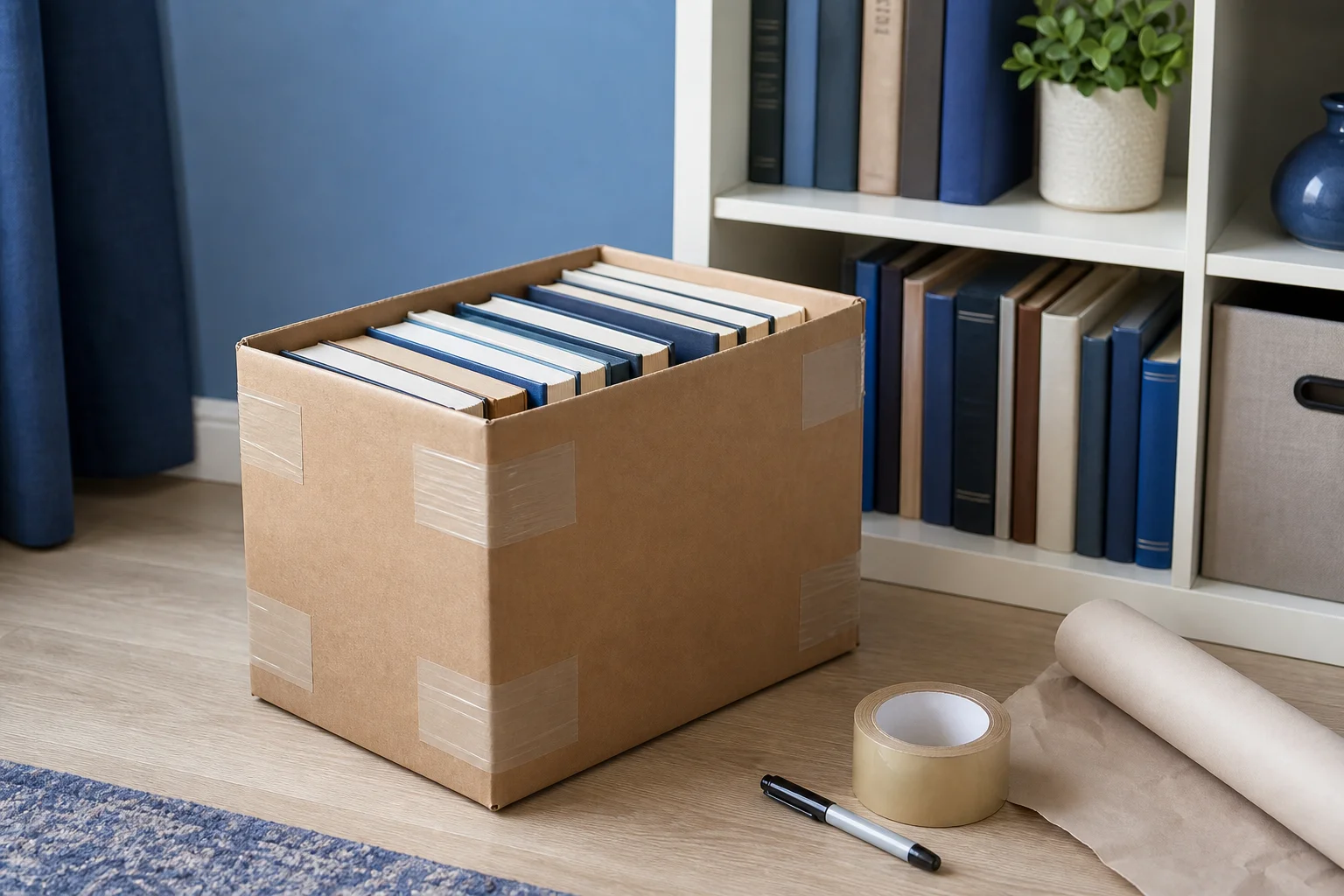
Seal every seam with strong packing tape. Label all visible sides with FRAGILE, GLASS, THIS END UP, and DO NOT LAY FLAT. Clear labels help keep the correct orientation visible no matter which side of the carton is facing outward. Keep the mirror vertical during carrying, transport, and storage to reduce pressure-related cracking.
Carry, Load, Store, and Unpack Mirrors Without Creating New Damage
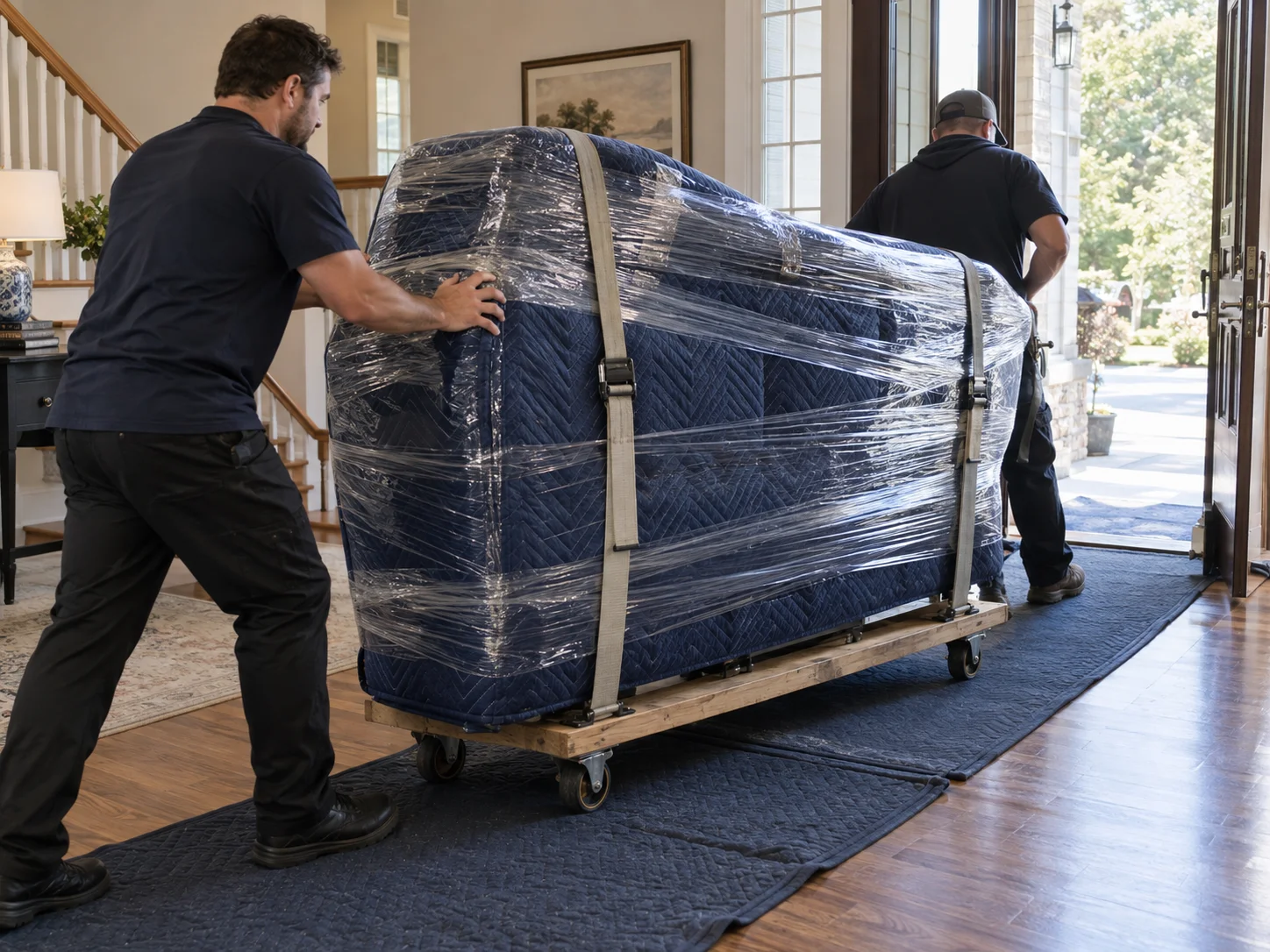
Large mirrors and framed glass should be carried by at least two people. One person should coordinate the route and commands while both carriers support the protected frame or carton from stable points. Do not grip thin frame sections, decorative projections, or the glass itself.
Clear the route before lifting. Doorways, stairs, furniture, and pets should be out of the way before the mirror leaves its packing area. Twisting, dragging, leaning heavily on one corner, or setting the package down abruptly can create stress along the frame and glass edges.
In the truck, the packed mirror should stay upright against a flat, solid wall or stable furniture. Soft padding, such as moving blankets or mattresses, can be placed between contact points. Professional loading guidance recommends placing fragile pieces between stable items and using straps or load-zone controls to prevent shifting during transit.
Do not place anything on top of the mirror box, even light cartons. Avoid positioning it near rear doors, where cargo can shift. Do not wedge it tightly between heavy objects because concentrated pressure can crack or warp the glass.
Storage and unpacking should keep the mirror upright until installation
For storage, keep the mirror upright on a padded base. Protect it from falling objects, moisture, temperature extremes, and pressure from nearby stored items. There should be enough clearance that nothing leans against the frame, corners, or glass.
At the destination, keep the mirror boxed until the installation path is clear. Move it upright to the unpacking area, open it on a padded surface, and slide the mirror out slowly while keeping it vertical. Wear protective gloves and shoes, and stop immediately if you see loose glass or instability.
Inspect the glass, frame joints, corners, backing, decorative finish, mounting hardware, and edges before removing all protection. Compare the mirror with your pre-move photos and document any new crack, chip, dent, scratch, or finish loss. If damage is found, do not press on the glass or attempt a repair while the mirror is under stress.
Reinstall only after confirming that the wall, anchors, brackets, wire, cleats, or other mounting hardware are rated for the mirror’s weight. Use two people for large mirrors and support the frame rather than the glass. For high-value, antique, oversized, or heavily ornamented mirrors, custom wooden crates with interior cushioning may be the safer packing method.
Need help packing delicate mirrors, framed glass, or other fragile items for an upcoming move? D1 Moving and Storage can help with packing services, moving supplies, local moving, long distance moving, storage, and related moving support. Visit D1 Moving and Storage to plan your move with a team that handles fragile items with care.